

Poker Room
Poker room in Bogotá: what to expect before you sit down at the table
There is a real difference between playing poker with friends on a Friday night and sitting down in a poker room for the first time. It is not just the atmosphere: it is the dynamics, the pace, the unwritten conventions and, above all, the quiet pressure of a table where everyone else seems to know exactly what they are doing. That leap can be intimidating, but it can also be the start of something that truly hooks you.
This article is written for anyone considering taking that step, or for someone who already has and wants to better understand how a professional poker room works. It is not a strategy guide or a manual for making money. It is an honest explanation of what you will find when you walk through the door of a poker room in Bogotá, how to prepare, and what to expect from the experience.
If you are already a regular player, you will likely recognise much of what is here. But even experienced players sometimes discover that house rules vary from one establishment to another, and knowing those differences before you sit down avoids unnecessary misunderstandings.
What sets a poker room apart from a casino table
Casino poker and room poker are entirely different animals. In casino games such as Ultimate Texas Hold’em or Three Card Poker, you play against the house. The bank has its own hand, there is a built-in mathematical edge, and the outcome depends largely on short-term luck. In a poker room, by contrast, you play against other players. The casino has no stake in whether you win or lose any particular hand: its revenue comes from the rake, a commission taken from each pot or charged by time at the table, depending on the format.
That changes everything. It means that skill matters in the long run in a way that simply does not exist in pure games of chance. It also means that the social dynamic is completely different: you are reading real people, managing your table image, making decisions under pressure against opponents doing exactly the same. It is a game within the game.
For the casual player coming from blackjack or slot machines, this difference can be liberating or disorienting. For the player who already knows recreational poker, the professional room is simply the next level of seriousness: the same basic rules, but with more structure, stricter adherence to the rulebook, and generally tougher competition at the table.
How the dynamics of a poker room work
When you arrive at a poker room, the first thing you do is put your name on the waiting list. The floorman — the person in charge of the room — will assign you a seat when one becomes available at the table matching your buy-in level. In busy rooms there may be several tables running simultaneously, and that is where a mechanism many new players are unfamiliar with comes into play: Must Move.
Must Move is a system that ensures the main table always has enough players. When a second table opens, players who arrive later go to that feeder table, and as seats open up at the main table, players from the secondary table rotate in. It is not optional: if you are at the feeder table and you are called to the main table, you must move. Understanding this in advance avoids surprises.
Another element that defines the room experience is pace. Unlike a casino game where the dealer controls the tempo mechanically, in a poker room the pace is set by the players. There is time to think, but there are also expectations of brisk play. Taking too long on routine decisions is frowned upon; asking for extra time on an important hand is perfectly acceptable if done politely. Learning to read that rhythm is part of fitting into the room.
The variants you will find and how to choose yours
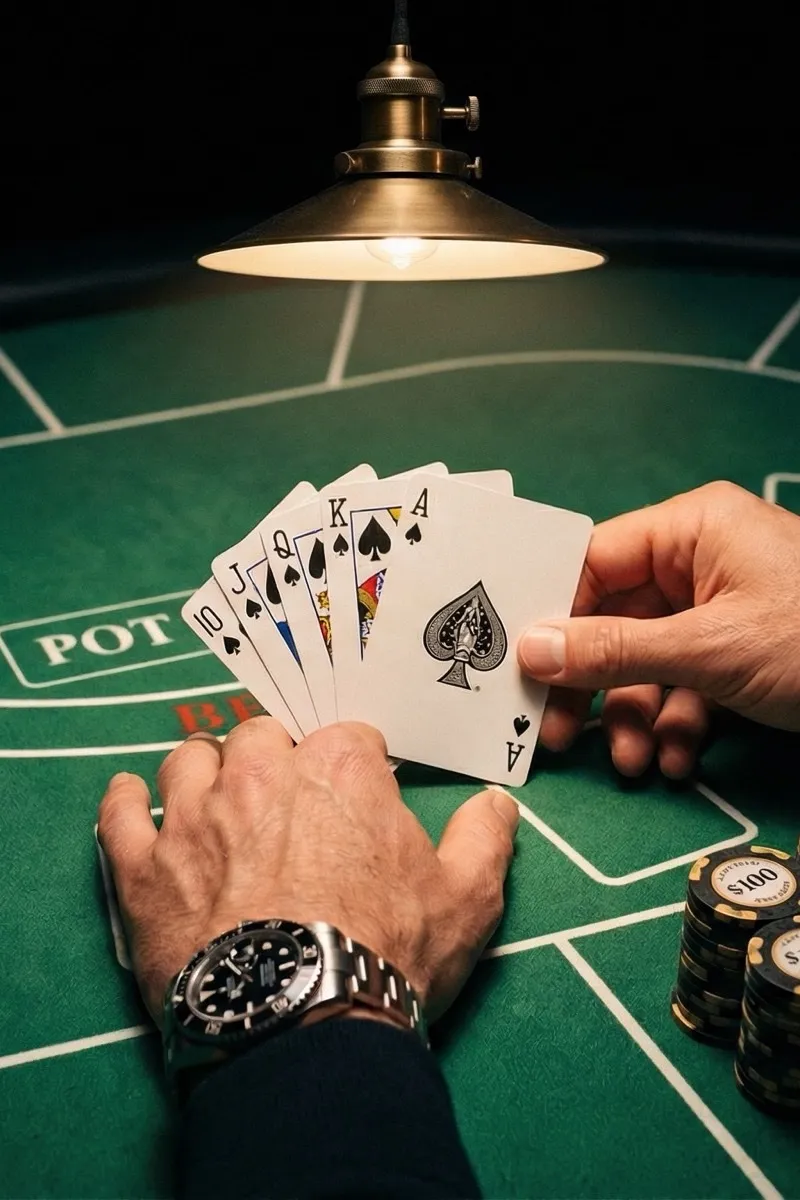
No-Limit Texas Hold’em is by far the most widely played variant in Bogotá’s poker rooms. If you have watched poker on television or streaming platforms, you probably already have a picture of how it works: two private cards, five community cards, betting across four rounds. The most complete reference on the basic mechanics of the game is on Wikipedia, although the specific rules of each room — including blind structure and rake — should always be confirmed directly with the establishment.
Pot Limit Omaha is the second most popular variant, especially among experienced players looking for more complex action. In Omaha you receive four private cards instead of two, but you must use exactly two of them and three from the board to make your hand. That restriction radically changes the dynamics of hand combinations and makes the game considerably more volatile. If you want to explore the mechanics in depth, Wikipedia has a detailed entry on Omaha.
The practical recommendation for someone starting out in a room is clear: begin with Hold’em. It is the variant with the most learning resources available, the one most players know, and the one with the most frequently active tables. Once you feel comfortable with the room dynamics, exploring Omaha or entering tournaments with mixed formats is a natural next step.
Tournaments versus cash games: two very different experiences
A poker room generally offers two formats: cash games and tournaments. They are such different experiences that some players specialise in one and rarely touch the other.
In a cash game, chips have direct monetary value. You can come and go as you please, rebuy chips if you lose your stack, and in theory play indefinitely. The pace is continuous and the pressure is constant but manageable: each hand is independent of the last. For many players, the cash game is the preferred format precisely because of that flexibility.
Tournaments work differently. You pay a fixed buy-in, receive tournament chips with no direct monetary value, and play until you run out of chips or reach the end. The blind structure increases over time, creating mounting pressure and forcing you to adjust your strategy as the tournament progresses. The prize is distributed among the players who finish in the paid positions. At The Lounge, the active tournament schedule is published on the Tournaments page, where you can find dates, formats, and entry conditions.
Neither format is better than the other: it depends on your available time, your tolerance for variance, and the kind of experience you are looking for. A tournament has a clear narrative, a defined beginning and end. A cash game is more open, more flexible, and for many people better suited to a casual visit.
The Bad Beat Jackpot and other room incentives
One of the features that distinguishes serious poker rooms is the existence of additional prizes that go beyond the pot of each hand. The best known is the Bad Beat Jackpot, an accumulated prize triggered under very specific circumstances: when an exceptionally strong hand loses to an even stronger one.
The logic behind the Bad Beat Jackpot is interesting. In poker, losing with a very good hand is one of the most frustrating moments in the game. The jackpot turns that frustration into a reward: both the winner and the loser of the hand, and sometimes every player at the table, receive a share of the accumulated pot. The exact criteria for a hand to qualify, how the prize is distributed, and what conditions must be met are published in the Bad Beat Jackpot rules. It is worth reading before you sit down, because there are specific table rules that players must follow for the jackpot to be valid.
Beyond the jackpot, many rooms have loyalty programmes that recognise hours of play. At The Lounge, that programme is Club N1VEL, where you accumulate points that can be redeemed for benefits within the casino. The thresholds and accrual rates are published on that page, as they may be adjusted over time.
Room etiquette: the unwritten rules that actually matter
The official room rules cover the formal regulations: what constitutes a valid bet, how an all-in is handled, what happens if a player acts out of turn. But there is another layer of conventions that is not written in any document and yet defines how other players perceive you at the table.
The most important is not to reveal information about your hand while the hand is still active. If you have already folded, do not comment on what you had or what you think others have until the hand is over. Doing so affects the play of players who are still active and is considered a serious breach of etiquette in any reputable room. Similarly, acting out of turn — whether by betting, folding, or looking at another player’s cards — disrupts the flow of the game and creates unnecessary tension.
How you handle your chips also communicates things. Stacking your chips neatly and visibly is basic courtesy: it allows other players to estimate your stack without having to ask. Splashing the pot — tossing chips into the centre in a disorganised way — makes counting difficult and is prohibited in most rooms. These details may seem minor, but they make the difference between a player who fits in well at the table and one who creates friction from the very first moment.
How to prepare for your first visit to the room
If you have never played in a formal poker room, there are a few concrete things you can do before you go. The first is to familiarise yourself with the basic rules of Texas Hold’em: the order of play, hand rankings, and the mechanics of betting. You do not need to be an expert, but arriving without knowing what a flop is or how the big blind works makes the experience unnecessarily difficult for you and for the other players.
The second is to read the rules of the room you plan to visit. At The Lounge, the general poker room rules are available online. Spend fifteen minutes on them: they cover the most common situations and give you a clear framework for what to expect. If you have specific questions, the Contact and Reservations page is the right channel to resolve them before you arrive.
The third, and perhaps most important, is to manage your expectations. The first session in a room is almost never the best one. There is a learning curve — adapting to the pace, the players, the particular conventions of that room. That is normal. What you can control from day one is your behaviour at the table: being respectful, playing within your means, and taking the time you need to understand what is happening before you act. That already puts you ahead of many new players.
The Poker Room at The Lounge, located in Zona T on Calle 81, is one of Bogotá’s most active venues for live play. If you want to see which tournaments are scheduled or review current promotions before planning your visit, that information is available on the Promotions page.
Related references
Frequently Asked Questions
- Do I need prior experience to enter a poker room?
- No. Most rooms welcome players of all levels. What matters is knowing the basic rules of the variant you plan to play and respecting the table rules. If you have questions, the room staff can guide you before you sit down.
- What poker variants are commonly played in Bogotá?
- No-Limit Texas Hold'em is the most common variant. Some rooms also offer Pot Limit Omaha and, occasionally, other variants in special tournaments. Check with the room you plan to visit to confirm which tables are active.
- How does Must Move work in a poker room?
- Must Move is a mechanism that keeps the main table always full. Players at the feeder table rotate to the main table whenever a seat opens up. You can find the exact rules on The Lounge's Must Move page.
- What is the Bad Beat Jackpot and how do you win it?
- It is an accumulated prize that is triggered when a very strong hand loses to an even stronger one. The exact criteria — which hands qualify and how the pot is distributed — are published in the Bad Beat Jackpot rules.
- Is it legal to play poker at a casino in Colombia?
- Yes. Casinos operating in Colombia are regulated by Coljuegos, the government body responsible for overseeing the gaming industry. Operating without a licence is illegal, so always verify that the establishment you visit holds a valid licence.
- Can I reserve a seat in the poker room in advance?
- It depends on the room. At The Lounge you can check availability and make your reservation through the Contact and Reservations page.
El juego descontrolado genera adicción. Juegue con moderación. Solo mayores de 18 años. Línea de ayuda: 106 (Secretaría de Salud de Bogotá).