
Poker Room
Bad Beat Jackpot in poker: what it is and how to win it
Losing with an incredibly strong hand is one of the toughest experiences poker has to offer. You are sitting on a full house, the board left little room for surprises, and then your opponent flips over four of a kind. In a regular game that means walking away from the table lighter in the pocket with a bitter story to tell. At a table with a Bad Beat Jackpot, that same defeat can pay you more than any pot you won all night.
The concept has existed for decades in Las Vegas and Atlantic City casinos, but in Colombia there are still players who arrive at the room without fully understanding how it works, what conditions must be met, and — most importantly — what share of the money is theirs if the jackpot hits at their table. This article answers those questions directly.
If you play or plan to play cash game at the Poker Room at The Lounge, in Bogotá’s Zona T, understanding the Bad Beat Jackpot is not a luxury: it is part of the rules that govern every hand dealt.
What exactly is a bad beat
In poker terminology, a bad beat is any situation in which a hand that statistically should win ends up losing. The term is broad: technically, a pair of aces losing to two pair on the river is already a bad beat for the player who holds them. But for jackpot purposes, the definition narrows considerably.
Casinos that offer this promotion set a minimum threshold: the losing hand must be strong enough that the defeat is genuinely improbable. In practice, that threshold usually sits in the range of premium hands — a high full house or better. The logic is straightforward: if the jackpot could be triggered by any loss, the pot would empty constantly and the prize would never grow to a size worth celebrating.
To find the exact threshold that applies at The Lounge, consult the Bad Beat Jackpot rules. That document specifies the minimum hand the loser must hold, the conditions the winning hand must meet, and any other requirements the casino has established under the oversight of Coljuegos.
How the accumulated pot is funded and grows
The jackpot does not appear out of nowhere. It is built hand by hand through a contribution deducted from each eligible pot. In practical terms, when you play at a table where this promotion is active, a small fraction of each pot goes directly into the jackpot fund rather than staying in the hand’s prize.
That mechanic has two important consequences. First: the pot grows continuously, and the longer it goes without being triggered, the larger it becomes. Second: participating in the jackpot is not something you choose hand by hand — if you are seated at a table where the promotion is active, you are already contributing and already eligible.
Some players view the contribution as an additional cost on top of the rake and prefer tables without a jackpot to maximize expected value per hand. Others value the implicit protection it offers: if you suffer the bad beat of a lifetime, at least there is a prize that softens the blow. Neither position is wrong; it depends on your playing style and how much weight you give to extreme variance.
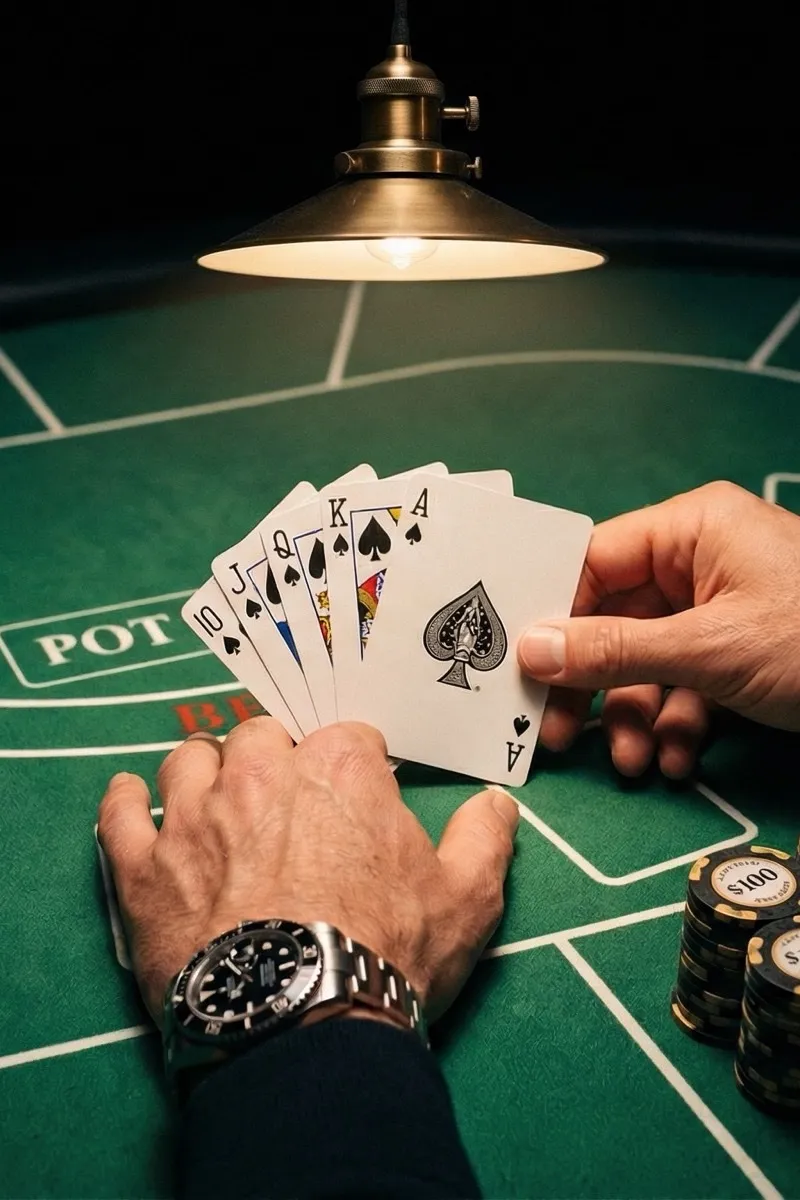
Who receives the money and in what proportion
This is one of the points that causes the most confusion. When the jackpot hits, the money does not go solely to the player who lost the hand. The accumulated pot is distributed among several players, and the exact breakdown varies according to each room’s rules.
The most common structure works like this: the largest portion of the jackpot goes to the player who suffered the bad beat — that is, the one who held the strong hand and lost. A smaller portion goes to the winner of the hand, and the remainder is split among the other players seated at the table at that moment. In some formats there is also a reserve that serves as a seed for the next jackpot, so the pot does not start from zero after being triggered.
The exact distribution, including the percentage for each party, is published in the Bad Beat Jackpot rules. Reading it before you play is not bureaucracy: it is knowing how much money you are entitled to if the jackpot hits while you are at the table, even if you are not the main player in the hand.
Conditions you must meet to be eligible
Simply being seated at the table when the jackpot hits is not enough. Most rule sets establish additional conditions that players must meet in order to receive their share of the prize.
One common condition is that both of your hole cards must have been used to form your final hand. In Texas Hold’em, that means you cannot win the jackpot if your winning hand uses only the community cards on the board. Another frequent requirement is that the hand must reach showdown: there is no jackpot if your opponent folds before the cards are revealed.
It is also typically required that the hand has progressed to a certain point before the bad beat occurs — usually that all community cards have been dealt. These conditions exist to prevent artificial situations in which two coordinated players attempt to force the jackpot to trigger.
Review the general room rules and the specific Bad Beat Jackpot page for the full list of current requirements. Conditions may be adjusted over time, and the version published on the site always takes precedence.
The difference between the jackpot and other room promotions
The Bad Beat Jackpot is not the only reason to pay attention to the room’s rules. The Lounge has other mechanics worth understanding before you sit down, and some of them interact indirectly with the jackpot.
The Must Move rule, for example, governs how tables are filled when several are running at the same time. If you are on a waiting list and get moved to the main table, that can affect how long you have been seated and therefore whether you meet any minimum time requirements that some jackpots impose. Knowing that dynamic saves you from unpleasant surprises.
The room’s Promotions also change periodically, and some are tied to cash game in ways that complement the jackpot. Checking that section regularly gives you a complete picture of the incentives available at any given time.
Finally, if your interest lies more in Tournaments than in cash game, keep in mind that the Bad Beat Jackpot generally does not apply in tournament format. Tournaments have their own prize structure, and mixing the two mechanics would create conflicts of incentive that would make the game less clean.
How to behave at the table when the jackpot hits
This is a topic that rarely appears in articles about the Bad Beat Jackpot, but it has real practical importance. When the jackpot hits, the hand must be completed normally and reach showdown. You should not reveal your cards early or make any gesture that could be interpreted as coordination with another player.
Once the dealer confirms that all conditions are met, the procedure is handled by the room staff. Your role as a player is to keep your cards visible on the table, not touch your chips until the dealer signals, and wait for the supervisor to validate the prize. Trying to rush the process or dispute the amounts in that moment is unhelpful and can complicate the verification.
If you have questions about whether your hand qualifies or how your share of the prize will be calculated, the right time to ask the supervisor is before the hand, not during it. Reading the Bad Beat Jackpot rules in advance is the most efficient way to arrive prepared for that conversation.
Related references
Frequently Asked Questions
- What is a bad beat in poker?
- A bad beat happens when a very strong hand loses to a statistically less likely hand — for example, a full house losing to four of a kind. It is a frustrating situation, but at tables with a Bad Beat Jackpot that loss can turn into a prize.
- Who receives the Bad Beat Jackpot money?
- Normally the pot is split among several players at the table: the largest share goes to the player who suffered the bad beat, a smaller portion goes to the winner of the hand, and in some formats the rest of the table also receives something. The exact percentages are published in the current rules at /en/poker/rules/bad-beat.
- Do I need to do anything special to participate in the jackpot?
- In most jackpot formats a small contribution is taken from each eligible hand played. Check the rules at /en/poker/rules/bad-beat to learn how the contribution mechanic works at The Lounge.
- Does the jackpot apply in poker tournaments?
- The Bad Beat Jackpot generally applies exclusively to cash game tables, not tournaments. Verify the current conditions in the room rules before you sit down.
- What happens if the jackpot is not triggered for a long time?
- The pot keeps accumulating with every contributing hand until someone triggers it. The longer it goes without being hit, the larger the accumulated prize grows.
- Can I see the current jackpot amount before I play?
- Yes. The room usually has a visible display showing the running total in real time. You can also check the Bad Beat Jackpot page on the site for additional details.
El juego descontrolado genera adicción. Juegue con moderación. Solo mayores de 18 años. Línea de ayuda: 106 (Secretaría de Salud de Bogotá).