
Blackjack
What is insurance in blackjack and when is it actually worth taking
The dealer flips their first card and it’s an Ace. At that moment, the croupier asks: “Insurance?” If you’re relatively new to blackjack, that question can feel like a trap or an opportunity. If you’ve been at the tables for a while, you probably already have a formed opinion — though not always for the right reasons.
Insurance is one of the most misunderstood bets in blackjack. Some players take it religiously every time the dealer shows an Ace, convinced they’re being prudent. Others dismiss it without a second thought. The reality, as is often the case in this game, is more nuanced than either of those positions.
This article explains what insurance is, how it works mechanically, what the math says about it, and in which situations — if any — it makes sense to consider it. There are no magic formulas here, but there is clarity on something that confuses many players at tables across Bogotá.
How insurance works, step by step
When the dealer receives an Ace as their up card, the game pauses briefly and a window opens for all active players to take insurance. This side bet costs up to half your original wager: if you have ten thousand pesos on the table, the maximum insurance bet is five thousand.
If the dealer completes a natural blackjack (Ace plus a face card or ten), insurance pays 2 to 1. That means if you bet five thousand on insurance, you receive ten thousand plus your insurance stake back. However, in that same scenario, your main bet is almost always lost — unless you also have a natural blackjack, in which case the main hand pushes. The net result when you hold a regular hand and the dealer has blackjack with insurance taken is typically neutral: you lose the main bet but collect the insurance.
If the dealer does not have blackjack, you lose the insurance bet and the game continues normally. Your original hand remains in play and you see it through to the end as if nothing had happened. The insurance bet disappears from the table and the round moves on.
The math behind insurance
This is where many players get a surprise. For insurance to be a positive expected-value bet, you would need the dealer to complete a blackjack frequently enough to justify the 2-to-1 payout. In a standard shoe without card counting, that simply doesn’t happen at the required frequency.
Think of it this way: in a 52-card deck there are 16 ten-value cards (four tens, four jacks, four queens, four kings). When the dealer shows an Ace, 51 cards remain in the deck. Of those, 16 would complete their blackjack. The approximate probability is 16 out of 51 — less than one third. But insurance only pays 2 to 1, which would require that probability to be exactly one third just to break even. Because it falls short of one third, the bet works against the player over the long run.
With multiple decks in play — as is the case at most modern tables — the proportion of ten-value cards in the shoe doesn’t change significantly, and the insurance disadvantage holds. Basic blackjack strategy, which is the set of mathematically optimal decisions for every situation, recommends declining insurance in almost every circumstance for a player who is not counting cards.
The special case: you have a natural blackjack
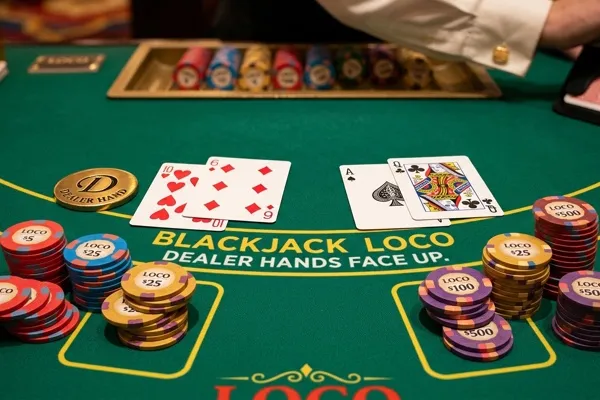
There is one situation where insurance feels especially tempting: when you also have a natural blackjack and the dealer shows an Ace. At that point, the croupier may offer you “even money” — essentially taking insurance to guarantee a 1-to-1 payout rather than risking a push if the dealer also has blackjack.
The emotional logic is understandable. You have the best possible hand and you don’t want to walk away with nothing. But mathematically, declining even money and accepting the possibility of a push is still the higher expected-value decision over the long run. When the dealer doesn’t have blackjack, you collect the full natural payout. When there’s a push, you neither win nor lose. Averaging those scenarios, the expected outcome of declining even money exceeds that of accepting it.
That said, some players prefer the certainty of an immediate payout — especially in short sessions or when the stake is meaningful to them. It’s a personal choice, but it’s worth making with clear eyes about what it implies mathematically.
When insurance might make some sense
The only scenario in which insurance can become a reasonable bet is when a player is accurately counting cards and the shoe has an unusually high concentration of ten-value cards. In that case, the probability of the dealer completing a blackjack rises above the threshold needed for insurance to be profitable.
However, this scenario comes with several important conditions. Card counting requires sustained practice and constant focus — it’s not something you improvise. Casinos are also alert to betting patterns that suggest counting, and they can take steps ranging from shuffling more frequently to asking a player to leave the table. In Colombia, casinos operate under the oversight of Coljuegos, and each establishment has its own internal policies on the matter.
For the recreational player visiting a Blackjack table at The Lounge in Zona T or any other casino in Bogotá, card counting is not a practical tool. And without that informational edge, insurance is a bet that, on average, costs money.
Insurance as an illusion of control
Part of the reason insurance is so popular among casual players is psychological. When the dealer shows an Ace, there’s a sense of threat. Insurance is presented as a way to “protect yourself,” and that narrative is powerful even if it isn’t entirely accurate.
Insurance does not protect your original hand. It is a completely separate bet that wins or loses on its own terms. If the dealer has blackjack and you took insurance, the net result may be neutral — which feels like having “saved” the hand — but in reality you lost the main bet and won the side bet. If the dealer doesn’t have blackjack, you simply lost extra money and the game continues.
This distinction matters because players who understand insurance as an independent side bet make better decisions than those who see it as a protection policy. Conceptual clarity helps you avoid the habit of taking it reflexively every time an Ace appears.
Specific rules and variants: check before you sit down
The exact rules of blackjack vary between casinos and between tables within the same casino. The number of decks, the conditions under which the dealer hits or stands, whether doubling after splitting is allowed, and the exact payout for a natural blackjack are all factors that affect the optimal strategy for the entire hand — including the decision about insurance.
Before sitting down to play, it’s worth reviewing the specific conditions at the table. At The Lounge, you can check the Blackjack rules and the Blackjack Loco rules directly on the site to understand the particulars of each variant. Blackjack Loco, for example, has its own features that can change the dynamics of the game in ways that aren’t always obvious at first glance.
If you’re interested in exploring other table games while you’re at the casino, the site also has detailed information on Punto y Banca and Ultimate Texas Hold’em — two options that attract quite different player profiles.
Related references
Frequently Asked Questions
- Does insurance in blackjack protect my original bet?
- Not directly. Insurance is an independent side bet. If the dealer has blackjack and you took insurance, you collect that side bet but lose your main bet (unless you also have blackjack, in which case the main hand pushes). The net result depends on the exact cards in each hand.
- Does card counting change the decision about insurance?
- Yes. When the shoe is heavily loaded with tens and face cards, the probability of the dealer completing a blackjack rises, and insurance becomes mathematically more attractive. However, card counting requires precision to execute and casinos take countermeasures when they detect it.
- Does insurance work the same way in Blackjack Loco as in classic blackjack?
- Blackjack Loco has its own rule variations. Check the Blackjack Loco page on the site to see exactly how insurance operates in that variant.
- Can I take insurance on any hand?
- Insurance is only available when the dealer's up card is an Ace. This side bet is not offered in any other situation.
- What happens if the dealer doesn't have blackjack after I took insurance?
- You lose the insurance bet and the game continues normally with your hand. The cost of the insurance is deducted from your chips and the hand plays out as if nothing had happened.
El juego descontrolado genera adicción. Juegue con moderación. Solo mayores de 18 años. Línea de ayuda: 106 (Secretaría de Salud de Bogotá).