

Blackjack
How to play blackjack from scratch: a beginner's guide
Blackjack is one of those games people think they already know before they’ve ever played it. It has appeared in so many films and TV shows that it feels familiar before you’ve touched a chip. But the moment you sit down at a real table for the first time — cards in hand, dealer waiting for your decision — you realize there are a couple of things nobody ever explained properly.
This guide is designed to fill that gap. It assumes you know nothing, but it doesn’t treat you as though you’ve never seen a deck of cards. The goal is that when you arrive at your first Blackjack table, you understand what’s happening, know what decisions to make, and — above all — feel comfortable making them.
It’s worth clarifying from the start that the exact rules at each table can vary. The number of decks, certain dealer conditions, and the payouts on some bets all depend on the casino and the specific table. Throughout this guide we’ll point out where to check the details that change from one venue to another.
The objective: it’s not just about hitting 21
The most common mistake among people learning blackjack is thinking the goal is to land exactly on 21. It isn’t. The real objective is to hold a hand with more points than the dealer’s without exceeding 21. If the dealer has 18 and you have 19, you win — even though you’re nowhere near 21. If the dealer busts and you don’t, you win too.
This distinction matters because it changes how you make decisions. It’s not always worth risking another card if your hand is already in a strong position. Sometimes the right move is to stay put and let the dealer get into trouble on their own.
The game is played between the player (or several players) and the dealer, who represents the house. Each player plays their hand independently against the dealer, not against the other players at the table. That means if someone next to you makes a decision you disagree with, it doesn’t directly affect your outcome.
Card values: the only thing you need to memorize before sitting down
The blackjack point system is straightforward. Cards from 2 through 10 are worth exactly what they show. Face cards (J, Q, K) are each worth 10 points. The ace is the most flexible card in the game: it can be worth 1 or 11, whichever works best for your hand at that moment.
When you have an ace counting as 11 without going over 21, you’re said to have a “soft hand.” For example, ace + 6 = soft 17. If you draw another card and get a 9, the ace drops to 1, giving you 16 instead of 26. That flexibility makes ace hands especially valuable.
The best possible hand is a “natural blackjack”: an ace plus a face card or a 10 as your first two cards. This hand typically pays more than a regular win, though the exact payout depends on the table. Before sitting down, it’s a good idea to check that detail at the table itself or on the casino’s Blackjack page.
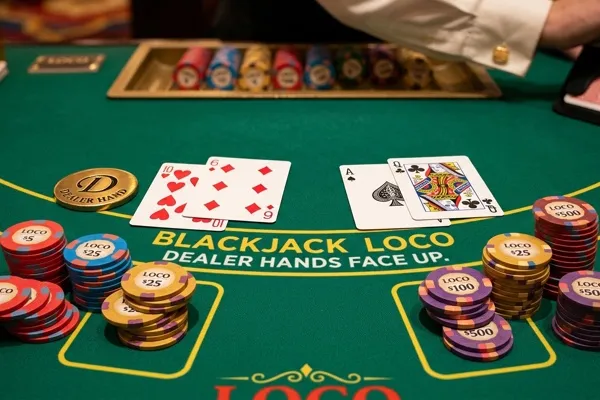
How a hand plays out: from placing your bet to collecting your winnings
A blackjack hand always follows the same sequence. First, all players place their bets before any cards are dealt. The dealer then gives two cards to each player and two to themselves: one face up and one face down (the “hole” card).
With your two cards in hand, you decide what to do. The dealer waits for your signal before moving on. Once all players have completed their hands, the dealer reveals their hole card and finishes their own hand according to fixed rules that don’t depend on what you did. That’s when hands are compared and bets are paid or collected.
One important detail: if the dealer’s face-up card is an ace, the game may offer a side bet called “insurance” before the hole card is revealed. This bet covers the possibility that the dealer has a natural blackjack. Whether it’s worth taking is a topic that deserves its own discussion, but it’s useful to know it exists so you’re not caught off guard when the dealer offers it.
The four decisions you’ll make in every hand
This is the heart of the game. When it’s your turn, you have up to four possible options depending on your hand and the table rules:
- Hit: you request an additional card. You can hit as many times as you like as long as you don’t exceed 21. If you go over 21, you “bust” and lose automatically, regardless of what the dealer does afterward.
- Stand: you decide your hand is good as it is and don’t want any more cards. You pass the turn to the dealer.
- Double Down: you double your initial bet and receive exactly one more card, with no option to hit again. This move makes sense in specific situations, generally when your hand has a strong chance of winning with just one additional card.
- Split: if your first two cards have the same value, you can separate them into two independent hands, each with its own bet. From that point you play each hand separately.
Some tables also offer Surrender, which lets you fold and recover half your bet before completing the hand if you feel your odds are very low. Not every table has it available, so it’s worth asking before you start.
How the dealer behaves: the rules that never change
One of blackjack’s advantages over other casino games is that the dealer makes no free choices. They follow fixed rules set in advance. That lets you anticipate, at least in part, how they’ll act.
The most common rule is that the dealer must hit while their hand is below a certain value, and must stand once they reach or exceed that threshold. However, there is an important variation that affects dealer behavior on certain soft hands, and that rule can differ between tables and casinos. Check the Blackjack page to know exactly how the dealer operates at that particular table.
What is universal: the dealer completes their hand after all players have finished theirs. If you bust before the dealer plays, you lose immediately. That is the house’s main structural advantage — it acts last, and if you bust, it doesn’t matter what happens to the dealer’s hand.
Your first visit to a real table: what to expect
Walking into a casino like The Lounge, in Bogotá’s Zona T, for the first time can feel a little daunting if you don’t know what to expect. In reality, the atmosphere at blackjack tables tends to be quite relaxed. Dealers are used to new players and can walk you through how the table works if you need it.
Before sitting down, watch the table for a few minutes. Note the minimum bet displayed on the felt, check whether there’s any information about the natural blackjack payout, and ask if there are any special rules you should know. That two-minute investment can save you a lot of confusion mid-hand.
If classic blackjack already sounds appealing, there’s also Blackjack Loco, a variant with its own rules that puts a different spin on the standard game. It’s not better or worse — it’s simply a different experience worth exploring once you have the base game down.
Finally, remember that blackjack in Colombia operates under the regulation of Coljuegos, the body that supervises and licenses gaming establishments across the country. That means when you play at a legally established casino, there is a regulatory framework protecting both the player and the operator — one more reason to always choose regulated venues over informal alternatives.
Related references
Frequently Asked Questions
- How much is an ace worth in blackjack?
- An ace can be worth either 1 or 11 points, whichever benefits your hand more. If you have an ace and a 7, your hand is worth 18 (ace as 11); if you then draw a 9, the ace drops to 1 so you don't bust.
- What does "standing" mean in blackjack?
- Standing means you don't want any more cards. You signal the dealer that your hand is final and wait for them to complete their own hand before comparing totals.
- Can I play blackjack without knowing basic strategy?
- Yes, you can play without memorizing it, but knowing the most common decisions — when to hit, when to stand — reduces the house edge considerably. For a first visit, understanding the objective and the four main actions is more than enough.
- Does blackjack in Colombia follow the same rules as in Las Vegas?
- Not necessarily. Rules vary by casino and table: number of decks, whether the dealer hits on soft 17, whether surrender is available, and the payout for a natural blackjack can all differ. Always check the table rules before you sit down.
- What is the difference between classic blackjack and Blackjack Loco?
- Blackjack Loco is a local variant with its own rules that set it apart from the standard game. You can see exactly how it works on The Lounge's Blackjack Loco page.
- Is it legal to play blackjack in Colombia?
- Yes. Casinos operating in Colombia are regulated by Coljuegos, the government body that grants licenses and oversees gaming establishments across the country.
El juego descontrolado genera adicción. Juegue con moderación. Solo mayores de 18 años. Línea de ayuda: 106 (Secretaría de Salud de Bogotá).