

Blackjack
Blackjack pays 3 to 2: what it means and why you should check it before you sit down
There is a number printed on the felt of almost every blackjack table in the world, and most players ignore it completely before sitting down. That number — which might read “Blackjack pays 3 to 2” or simply “3:2” — is not decorative. It is one of the variables that most influences how much money you can expect to win or lose during a session, and understanding it takes less than five minutes.
This article does not assume you are a beginner. You may have been playing blackjack at casinos in Bogotá for years without ever stopping to think about this detail. Or you may be new to the game and want to start on solid footing. Either way, the natural blackjack payout is a concept worth having clear, because it directly affects the mathematics of the game — not just the luck of the night.
Let’s break it down.
What exactly is a natural hand and why does it have its own payout
In blackjack, a natural hand is the combination of an ace with any ten-value card: the ten itself, the jack, the queen, or the king. It is the strongest hand in the game, totaling twenty-one with just two cards, and under normal conditions it wins automatically — unless the dealer also has a natural, in which case it is a push.
Because this hand is special, the casino pays it differently from an ordinary twenty-one. A regular winning hand simply pays 1 to 1: you bet ten, you win ten. But the natural has its own multiplier, and that is where 3 to 2 comes in.
With a 3 to 2 payout, for every two units wagered you receive three in winnings. If you put ten thousand pesos on the table and draw a natural, the casino pays you an additional fifteen thousand. Your chips plus the winnings total twenty-five thousand. The fraction works the same with any amount: a bet of fifteen thousand returns twenty-two thousand five hundred in winnings. The calculation is straightforward: multiply your bet by 1.5.
Why a 6 to 5 payout is not the same, even though it sounds similar
Some casinos — especially in markets where players pay little attention to table conditions — have adopted an alternative payout for the natural: 6 to 5. The surface logic is that six-fifths is greater than one, so it sounds generous. But compared with 3 to 2, it is worse for the player.
With a 6 to 5 payout, a bet of ten units returns twelve in winnings, not fifteen. The difference per hand seems minor, but blackjack is a game of volume. An active player can see several naturals in a two-hour session. Each of those naturals paid at 6 to 5 instead of 3 to 2 represents money that does not end up on your side of the table.
The mathematical difference between the two payout structures is not trivial. Shifting from 3 to 2 to 6 to 5 significantly increases the casino’s mathematical edge, and that increase comes directly out of the player’s pocket. It is not a minor rule tweak — it is one of the adjustments with the greatest impact on the expected outcome of a session.
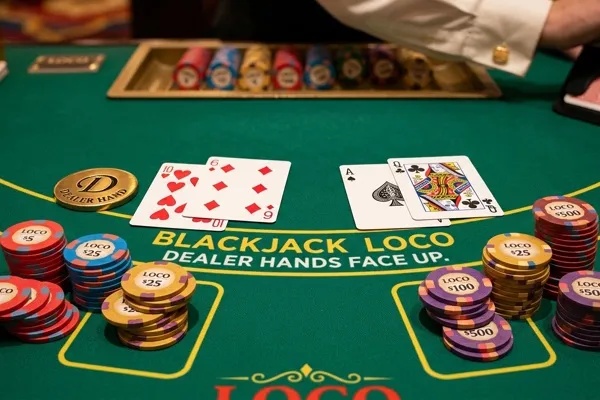
How to read the table before betting a single chip
The good news is that this information is not hidden. The natural blackjack payout is printed on the table felt or on a fixed sign visible from the seat. Before placing your first chip, take ten seconds to read what that sign says.
Look for phrases like “Blackjack pays 3 to 2”, “BJ pays 3:2”, or simply “3:2”. If you see “6 to 5” or “6:5”, you already know the natural pays less. If the sign is unclear or you cannot find it, ask the dealer before betting. It is a completely valid question and any professional dealer will answer it without hesitation.
Other details worth checking on the sign or asking the dealer: whether the dealer hits on soft 17, whether doubling after splitting is allowed, and whether surrender is an option. These rules also affect the mathematics of the game, though less dramatically than the natural payout. For the specific rules of each variant available at The Lounge, the details are published on the Blackjack page and the Blackjack Loco page, where you will find the current conditions for each table.
How the natural payout relates to basic strategy
Blackjack basic strategy — that set of optimal decisions for every hand combination against the dealer’s visible card — was developed assuming certain game conditions. One of those conditions is that the natural pays 3 to 2. When the payout changes to 6 to 5, some of the mathematical assumptions underlying basic strategy are altered.
This does not mean basic strategy stops being useful with a 6 to 5 payout. It remains the best decision guide available to a player without card counting. But it does mean that the mathematical starting point of the game is already less favorable before you make a single decision.
For players who approach the game more rigorously, the natural payout is a figure that feeds into any calculation of expected advantage. For those who play more casually, the message is simpler: if two tables are available and one pays 3 to 2 while the other pays 6 to 5, the first is objectively better for you, all else being equal.
What happens with side bets and other table payouts
The 3 to 2 payout applies specifically to the main natural hand. Side bets — such as Perfect Pairs, 21+3, or others you may find depending on the table — have their own independent payout tables. Those values vary by casino and by the specific table configuration, and they are not covered by the same 3 to 2 principle.
Before making a side bet, check its payout table. It is generally printed in the corresponding betting area on the felt. If it is not visible, the dealer can show it to you. Side bets carry house edges that differ from the main hand, and in many cases that edge is considerably higher.
The same principle of verification applies when playing other table variants. In Punto y Banca, for example, the payout conditions and third-card rules are different and specific to that variant. In Ultimate Texas Hold’em, the betting structure and multipliers work differently from blackjack. Every game has its own logic, and knowing it before you bet is always the smarter position.
Why this detail matters more in Bogotá than in other contexts
In Colombia, casinos operate under the regulation of Coljuegos, the entity that oversees games of chance in the country. That regulation establishes general frameworks, but the specific conditions of each table — including the natural payout — can vary between establishments and between tables within the same casino.
Bogotá has a varied casino offering, especially in areas like Zona T, where The Lounge operates on Calle 81. In that context, players who move between different venues or visit casinos with some regularity have every reason to verify the conditions of each table before sitting down. Not all blackjack tables are the same, even if the game carries the same name.
Knowing the natural payout does not make you an expert overnight, but it does give you an informational edge that many players throw away by not taking ten seconds before betting. If you also want to make the most of the benefits accumulated from your casino visits, the N1VEL Club has a loyalty program with perks worth looking into. And if there are active promotions related to the blackjack tables, you will find them published in the Promotions section.
Blackjack is a game where the information available before you bet is limited but real. The natural payout is part of that information. Use it.
Related references
Frequently Asked Questions
- What does it mean for blackjack to pay 3 to 2?
- It means that for every two units wagered, a natural hand (an ace plus any ten-value card) pays three units in winnings. If you bet 10,000, you win an additional 15,000, for a total of 25,000 in hand.
- Is 3 to 2 the same as 6 to 5?
- No. They are two different payout structures. With 3 to 2, a bet of 10 units returns 15 in winnings. With 6 to 5, the same bet returns only 12. The difference seems small per hand, but it adds up significantly over the course of a session.
- Does the natural blackjack payout affect the house edge?
- Yes, directly. Changing the natural payout from 3 to 2 to 6 to 5 considerably increases the casino's mathematical advantage. It is one of the rule adjustments with the greatest impact on the player's expected outcome.
- How do I know what the table pays before I bet?
- The natural blackjack payout is printed on the table felt or on a visible sign when you sit down. If you cannot see it clearly, ask the dealer before placing your first chip.
- Where can I see the exact blackjack rules at The Lounge?
- The current rules for each variant are published on the casino pages. Check the Blackjack page at /en/casino/blackjack or the Blackjack Loco page at /en/casino/blackjack-loco for up-to-date details.
- Does the 3 to 2 payout also apply to side bets?
- No. The 3 to 2 payout applies only to the main natural hand. Side bets have their own payout tables, which vary by table and casino. Check the table or the game page for those values.
El juego descontrolado genera adicción. Juegue con moderación. Solo mayores de 18 años. Línea de ayuda: 106 (Secretaría de Salud de Bogotá).